Packing for a retreat should not become another small performance. You are not trying to arrive as a different person with a perfect linen wardrobe and a suitcase full of wellness equipment. You are trying to make the week easier for your body.
Warm-weather retreats ask for light layers, sun protection, breathable clothes, enough flexibility for local customs, and fewer “just in case” items than you think. The aim is not to pack for every possible mood. It is to remove the small frictions that make travel feel more bracing than it needs to.
Pack for heat, shade and stillness
Warm climates are not only about heat. They are about moving between heat and shade, outside and inside, practice and rest, bright midday and cooler evenings.
Bring clothes that let the body regulate. Lightweight cotton, linen, bamboo, or breathable technical fabrics are more useful than heavy athleisure. A few loose layers will usually serve you better than a suitcase full of fitted yoga outfits.
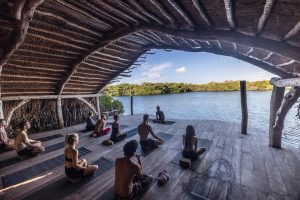
For practice, think comfort over compression. You want to sit, fold, lie down, breathe, and stay in a shape without adjusting your clothes every two minutes. If the retreat includes yin, restorative yoga, or yoga nidra, soft clothing matters more than “activewear”.
The basic clothing list
For a week, most people need less than they imagine:
- 3–4 comfortable practice outfits
- 2–3 loose daytime outfits
- 1–2 simple evening layers
- light jumper, shawl, or wrap for cooler nights
- underwear and sleepwear that breathe
- swimwear if there is a pool, beach, hammam, or spa
- sandals or slides
- comfortable walking shoes
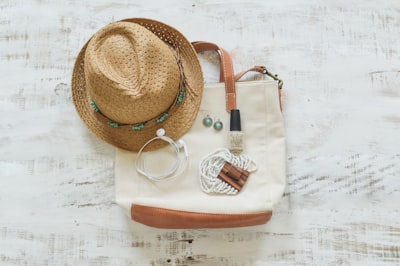
- sun hat
- sunglasses
If laundry is available, pack even less. If the retreat is remote, assume you may repeat outfits. Nobody on a retreat is keeping score.
A shawl or large scarf is unusually useful: shade, warmth, modesty, plane blanket, meditation layer, shoulder cover for cultural sites, and something to wrap around you after evening practice.
What to bring for practice
Most retreats provide mats, props, blankets, bolsters, or blocks. Confirm before you travel, but do not assume you need to carry a full studio with you.
Useful practice items:
- lightweight travel mat or mat towel, if you prefer your own surface
- refillable water bottle
- small notebook and pen
- eye pillow or soft scarf for yoga nidra
- warm socks for still practices
- any personal supports your body relies on
The warm socks may sound odd until you are lying still after sunset. Restorative practice can cool the body quickly, especially when the nervous system begins to downshift.
If you are new to this style of practice, read yoga for the nervous system: why rest is part of the practice.
Sun, heat and hydration
This is where warm-weather packing becomes practical rather than aesthetic.
Bring high-protection sunscreen, lip balm with SPF, electrolytes or hydration salts, essential medication, a small first-aid kit, insect repellent if needed, and simple after-sun or moisturiser.
Hydration is not just drinking more water. In heat, especially with travel, walking, yoga, or unfamiliar food, electrolytes can help the body hold onto fluid properly.
If the retreat includes eclipse viewing, desert travel, or long outdoor windows, sun protection matters even more. A hat that actually shades your face and neck is better than a beautiful one that does nothing.
Pack for the culture, not just the climate
Warm-weather retreat destinations often sit inside rich cultural contexts: villages, temples, mosques, markets, historic towns, family-run venues, or rural communities. Packing well means arriving with enough flexibility to move through those places respectfully.
That usually means covered shoulders, longer trousers or a skirt, a scarf or wrap, clothes that are not transparent in strong sunlight, and comfortable shoes for uneven streets or historic sites.
This is not about becoming formal. It is about not making every outing a negotiation with your suitcase.
Travel-day essentials
Keep these in your carry-on: passport, travel insurance details, essential medication, phone charger and adapter, one change of clothes, a light layer for the plane, eye mask or earplugs, simple snacks, and the retreat address.
If you are arriving alone, save transfer details offline. Screenshot the address. Know who is meeting you, where, and when. That small preparation makes the arrival feel much less exposed. We cover the emotional side of that in coming alone to a yoga retreat.
What not to overpack
You probably do not need multiple pairs of heavy shoes, a different outfit for every meal, a large stack of books, full-size toiletries, complicated jewellery, or your entire yoga-prop collection.
Before you close the bag, ask:
- Will this help my body stay comfortable in heat?
- Will this help me move respectfully through the place I am visiting?
- Will this make the retreat easier, or just heavier?
If the answer is no, leave it.
As dates and places firm up for the 2027 retreat, we will share practical notes like this slowly and clearly. Keep me in the loop ↗ — no pressure, just useful updates.