The words sound similar, but they create different expectations.
A retreat usually asks you to step out of ordinary life for long enough that the body notices. A gathering can be shorter, lighter and closer to home. Both can be meaningful. They simply hold a different kind of space.
For Solipse, the difference is less about status and more about rhythm.
What makes something a retreat?
A retreat is a fuller container. It usually includes several days away, accommodation, repeated practice, shared meals, unstructured rest and a clear sense of arrival and departure.
The point is not to fill every hour. The point is to create enough continuity for the nervous system to stop scanning for the next task.
A retreat gives the body time to move through the first layer of busyness. The first practice may still feel mental. The first night may be strangely quiet. By the second or third day, people often begin to notice smaller things: appetite, sleep, breath, posture, the way they speak, the amount of tension they have been carrying.
That is why a retreat needs space around the schedule.
Practice matters. So do meals, silence, walks, light, heat, conversation and sleep.
What makes something a gathering?
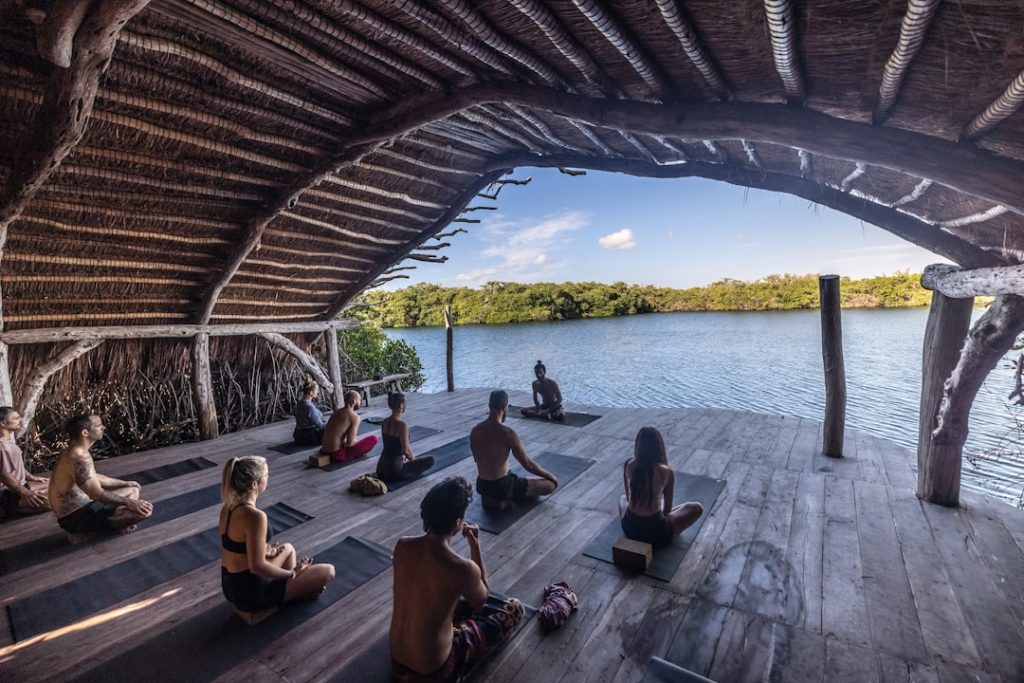
A gathering is usually shorter and more accessible. It may be a single day, a weekend, a seasonal event, or a smaller group experience built around practice, food, conversation and place.
It may not require flights or a long absence from work. It may happen closer to home. It may be the first step for someone who is curious, but not ready to commit to a longer retreat.
A good gathering still has a strong container. It should not feel like a rushed workshop with a wellness label attached. There should be time to arrive, move, breathe, eat, speak, and leave without being pushed back into the world too abruptly.
The difference is scale.
A retreat changes the whole frame for several days. A gathering creates a pocket of reset inside ordinary life.
Why both matter
Not everyone can disappear for a week. Not everyone wants to begin with an international journey. For many people, a smaller gathering is a more honest entry point.
It lets someone feel the tone of the work: the pace, the teaching, the food, the people, the level of care. It builds trust through direct experience rather than explanation.
A retreat then becomes less abstract. You know what kind of space you are entering.
For Solipse, gatherings also make sense as a way to begin locally. A Victoria gathering can hold the same principles as a larger eclipse retreat — nervous-system reset, intelligent movement, seasonal timing, food, place and rest — but in a simpler form.
What to expect from each
On a retreat, expect a deeper arc. You may arrive tired, move slowly into the body, sleep differently, and leave with a clearer sense of what needs to change.
On a gathering, expect a smaller reset. You may leave with more breath, more steadiness, a better meal than you would have made alone, and a reminder that rest does not need to be dramatic to be real.
Neither format is better.
A retreat gives you distance. A gathering gives you contact.
Both can bring the system back down.
How to choose where to begin
If you are depleted, curious, or unsure how your body will respond to a longer retreat, a gathering can be a sensible first step. It gives you contact with the practice and the people without asking for a major travel commitment.
If you already know you need distance from your normal environment, a retreat may be more useful. The extra days matter. So does sleeping somewhere else, eating in rhythm, and not having to re-enter work after a single afternoon of calm.
Both formats should leave you clearer, not overwhelmed. The right choice is the one your real life can actually absorb.
Image: Photo by Woody Kelly on Unsplash.