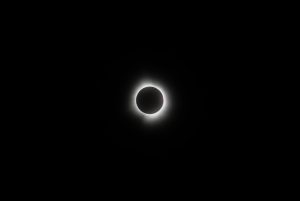
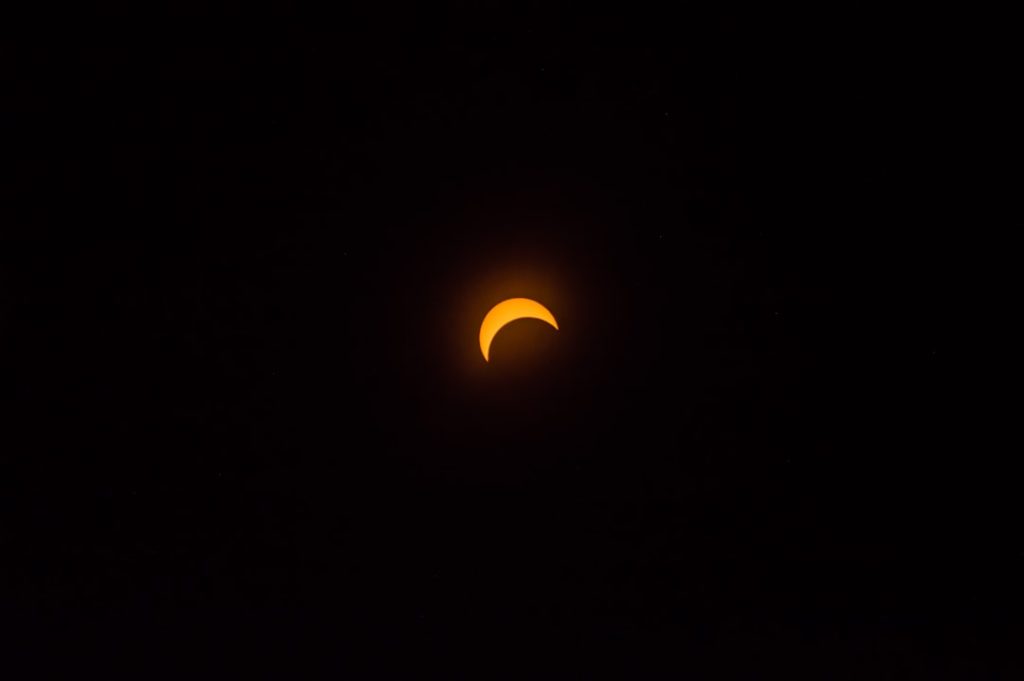
A total solar eclipse is often described as a visual event: the moon passes in front of the sun, daylight falls away, and the sky changes.
But people who travel for totality often talk about something more bodily. The air cools. Shadows sharpen. Birds and insects may shift their behaviour. People go quiet without anyone asking them to. For a few minutes, the usual rhythm of the day is interrupted.
That interruption is part of why totality feels so different from simply looking at the sky.
The body expects daylight
The nervous system is constantly reading the environment. Light, sound, temperature, movement and social cues all help the body decide what kind of moment it is in.
Most days, the signals are familiar. Morning gets brighter. Afternoon holds. Evening softens. The body may not think about this sequence, but it recognises it.
Totality breaks that pattern. The sky darkens in the middle of the day. The temperature can drop. A crowd that was chatting may suddenly become still. For a short time, the body receives signals that do not match the clock.
That mismatch can create awe. It can also create silence.
Time feels different when attention changes
We tend to measure time by minutes, but we feel time through attention. A distracted hour can disappear. A difficult minute can feel long. A moment of complete attention can feel strangely spacious.
Totality concentrates attention without effort. People stop checking other things because there is nothing ordinary to check. The event is brief, impossible to pause, and shared by everyone present.
That is one reason the experience can feel larger than its duration.
It is not necessary to add mystical claims to make it meaningful. The body already knows when something rare is happening.
Why practice belongs near an eclipse
Yoga practice can support an eclipse experience because it trains the same basic capacity: to notice what is happening without rushing to fill it.
Breathwork steadies the system. Slow movement helps the body arrive. Meditation makes it easier to sit with intensity without turning it into performance.
The aim is not to manufacture a profound experience. The aim is to be available to the one that is already there.
For some people, totality may feel emotional. For others, it may feel quiet, strange, beautiful or simply precise. There is no correct response. A rare sky event does not need everyone to react in the same way.
A different kind of travel memory
Many travel memories are built around activity: where you went, what you saw, what you ate, what was photographed.
Totality is different. It is remembered through atmosphere. The colour of the light. The sound of the people around you. The seconds before darkness. The first return of the sun.
That is why the setting matters. A crowded, rushed, badly planned eclipse trip may still deliver totality, but the body may be too braced to receive it fully.
A calmer setting gives the event more room.
This is the deeper reason Solipse is interested in eclipse travel. Not spectacle for its own sake. A rare natural event, held with enough care that the body can actually be there for it.
How to prepare without overloading it
The best preparation for totality may be less information, not more. Know the timing. Know where you need to stand. Know how to protect your eyes. Then leave room for the event to be felt.
A simple practice beforehand can help: slow breathing, a few grounding shapes, and a moment to notice the ordinary daylight before it changes. That contrast is part of the experience.
After totality, it can be useful not to rush straight into explanation. Let the body register the return of light. Let the group be quiet for a while. Some moments become clearer when they are not immediately narrated.