The sky has always given humans a way to mark time.
Sunrise and sunset. New moons and full moons. Solstices. Equinoxes. Eclipses. Seasons of heat, rain, harvest, migration, flowering, darkness and return.
You do not need to predict the future to feel the power of that.
Solipse uses celestial language symbolically, not as fortune-telling. The distinction matters.
Symbolic does not mean vague
Symbolic timing is a way of paying attention.
A solstice can mark the longest light or the deepest dark. An eclipse can mark interruption, awe, shadow, alignment and the temporary collapse of the familiar. A new moon can become a quiet prompt for beginning. A full moon can become a prompt for visibility, fullness or release.
These meanings are not scientific claims about what will happen to your life. They are human ways of working with rhythm.
That can still be useful.
People often need thresholds. A date. A ceremony. A reason to pause. A shared marker that says: notice this.
The sky offers those markers without asking anyone to believe a horoscope.
What Solipse avoids
Solipse does not need to tell people that an eclipse will transform their destiny.
It does not need to predict relationships, money, identity, healing or life changes based on the movement of planets. It does not need to make fear-based claims about portals, downloads, upgrades or cosmic urgency.
That language can be seductive because it sounds meaningful. It can also create pressure.
People arriving at a retreat may already be tired, open or in transition. They do not need exaggerated certainty placed on top of that. They need steadiness, space and accurate information.
The sky can be powerful without being used to overpromise.
What a celestial retreat can hold instead
A celestial retreat can hold attention.
It can use rare natural events as anchors for practice, rest, reflection and gathering. It can help people notice light, shadow, time, body, breath and landscape. It can connect movement and stillness to the actual conditions of the day: heat, horizon, darkness, silence, birds, crowds, clouds, the return of light.
That is already enough material.
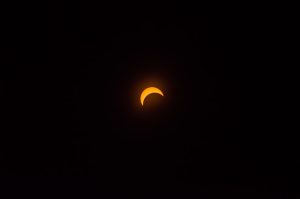
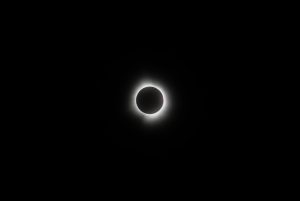
During a total solar eclipse, the world does change for a few minutes. The light drops. Temperature may shift. Animals may respond. People often become quiet. The body can feel the strangeness before the mind has language for it.
No prediction is needed.
Symbolic language and nervous-system care
Symbolic timing works best when it supports regulation rather than intensity.
A full schedule around an eclipse can easily become overstimulating: travel, anticipation, crowds, heat, cameras, expectations. A calmer retreat rhythm gives the nervous system somewhere to land.
Practice can frame the experience without controlling it. Breathwork before travel. Gentle movement on arrival. Restorative practice after long transfers. Silence before totality. A slow meal afterwards. Time to integrate without needing to perform revelation.
This is celestial work in a grounded form.
A better kind of meaning
Meaning does not have to be inflated to be real.
A solstice can simply remind us to notice light. An eclipse can remind us that even the most familiar sky can become strange. A moon cycle can remind us that bodies and attention also move in phases.
These are modest interpretations, but they leave room for direct experience.
That is the point.
The sky does not need to be turned into a script for your life.
Sometimes it is enough to look up, feel the body respond, and let the day become a marker.
A grounded ritual can be enough
If a celestial date is used as a retreat marker, the ritual does not need to be elaborate. It might be a walk at dusk, a few minutes of silence, a written reflection, breath before sunrise, or a shared meal timed around the changing light.
The value is in attention, not theatricality.
A grounded ritual gives people a way to notice the moment without being told what it must mean. One person may feel grief. Another may feel awe. Another may simply feel tired and grateful to be quiet. All of those responses can belong.