Tunisia sits on the 2027 eclipse path with a different kind of promise. It is less obvious than Egypt, less established as a retreat destination than Morocco, and less familiar to many travellers than Spain.
That quieter profile is part of its appeal.
For Solipse, Tunisia represents a possible route to totality that feels spacious, North African, and less burdened by the expectations that gather around more famous eclipse destinations.
A quieter candidate
When people imagine the 2027 eclipse, Egypt often comes first. Luxor, the Nile and ancient temples create an immediate story. Spain offers ease. Morocco offers mature retreat infrastructure and strong travel appeal.
Tunisia sits between these energies. It has Mediterranean access, desert landscapes, Islamic and North African culture, Roman and Arab histories, and a sense of being slightly less overdetermined.
That could make it powerful. It could also make it more complicated.
A quieter destination still needs strong logistics. Transport, accommodation, food, local partners, heat management, cultural care and eclipse viewing conditions would all need careful checking before it could become a serious retreat choice.
Sfax, Sahara and the feeling of space
The eclipse path brings attention to areas around Tunisia that may be less familiar to many guests. Names like Sfax or desert-edge locations do not carry the same immediate recognition as Marrakech or Luxor, but they open a different possibility: a retreat that is less about iconic tourism and more about atmosphere.
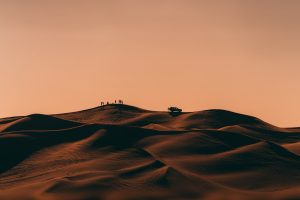
Sahara-adjacent landscapes can change the body’s sense of scale. Open horizons, dry heat, sparse sound and wide sky are not decorative details. They affect how people feel.
A total eclipse in a landscape like that could be deeply memorable if held well.
The practical cautions
Tunisia should not be romanticised. Less crowded does not automatically mean easier. Infrastructure may be thinner depending on location. Heat can be serious. Travel routes may require more thought. Cultural norms around dress, Ramadan timing, prayer, food and public behaviour should be understood with respect rather than treated as background colour.
A Solipse retreat would need local expertise. Not just a venue search, but people who understand the region, the roads, the pace, and the difference between a beautiful idea and a workable itinerary.
This is especially important for eclipse travel, where a small logistical mistake can shape the whole experience.
Why it still belongs on the shortlist
Tunisia belongs in the conversation because it offers a different emotional tone. It may be quieter, less expected, and more spacious than the obvious choices.
That could suit guests who want the eclipse to feel less like an event and more like a threshold.
The Solipse question remains practical: can the destination hold rest, practice, food, safety, cultural respect and a precise viewing plan without making guests feel braced?
If the answer is yes, Tunisia could become one of the most distinctive routes to totality.
Not the loudest option. Possibly one of the clearest.
What would make Tunisia work
Tunisia would need a slower planning process than a more familiar retreat destination. The first question would not be which venue looks beautiful. It would be who can hold the ground locally: drivers, guides, cooks, hosts and people who understand both guest comfort and regional reality.
The second question would be heat. A warm-climate retreat has to respect the body’s limits. Practice times, shade, hydration, meals and rest periods would need to be designed around conditions, not added afterwards.
If those foundations are strong, Tunisia could offer something rare: a quieter path to a very public sky event. For the right group, that restraint could be the appeal. Tunisia would not need to compete with the better-known destinations. It would need to be planned honestly, with fewer assumptions and more local listening. The decision would need patience. That patience may be exactly what keeps the destination from becoming a fantasy version of itself.