Yin yoga is quiet, but it is not passive.
The practice often looks simple from the outside: low shapes, long holds, props, stillness. There may be less visible effort than in a flowing class. But inside the body, something more patient is being asked.
Yin gives time to the tissues, and time changes the quality of listening.
What fascia has to do with it
Fascia is connective tissue that wraps, supports and links structures throughout the body. It is not separate from movement. It helps transmit force, hold shape and create a sense of continuity through the body.
When people talk about feeling “bound up” or “held” in certain areas, they are often describing a mixture of muscle tension, connective tissue load, posture, stress, habit and nervous-system tone. Fascia is part of that story, but not a magic explanation for everything.
A grounded yin practice does not need to overclaim. It simply recognises that the body responds differently when it is given time.
Why slow holds feel different
In faster movement, the body often moves through sensation quickly. That can be useful. Flow builds heat, coordination and confidence.
Yin works through a different doorway. A shape is entered slowly, supported well, and held long enough for the first layer of resistance to become visible. The aim is not to force depth. It is to meet the edge without turning it into a battle.
Over time, breath and gravity do some of the work. The body may soften. Or it may show that it is not ready to soften. Both are useful information.
Release is not always the body giving in. Sometimes release is learning not to push.
The nervous system matters
Tissue does not exist outside the nervous system. If a person feels unsafe, rushed or judged, the body may guard more strongly. If the setting is calm, warm and steady, the body may be more willing to downshift.
This is why yin can feel emotional for some people. Stillness removes distraction. Sensation becomes clearer. The mind has fewer places to go.
That does not mean every sensation needs a story. It means the practice should be held with care.
A good yin class gives options. It uses props. It respects different bodies. It does not turn discomfort into a virtue.
Why yin belongs on retreat
Retreat settings are well suited to yin because the whole day can support the practice. Food, rest, quiet, nature and slower transitions all help the body receive stillness more easily.
A long-held shape after a rushed workday may feel like another demand. The same shape after a quiet morning, a walk and a simple meal can feel completely different.
Context matters.
Yin also balances the more active parts of a retreat programme. It gives guests a way to feel subtle change without needing to achieve anything visible.
A deeper kind of release
The deepest release in yin is not dramatic flexibility. It is the moment the body realises it does not have to keep proving itself.
That may show up as a softer hip, an easier breath, a quieter jaw, or the decision to use one more blanket and do less.
Slow practice teaches a simple thing that modern life often forgets: not every opening has to be forced.
Some openings need time.
How to practise well
A useful yin practice starts with less ambition. Choose the version of the shape that lets the breath remain steady. Use props before the body has to ask loudly. Come out slowly. Notice the rebound before moving on.
The sensation should be clear, but not sharp. There can be intensity, but it should not feel like threat. This distinction matters because the body learns from the tone of the practice as much as from the shape itself.
On retreat, yin can become a way of listening again. Not to fix the body, but to stop overriding it.
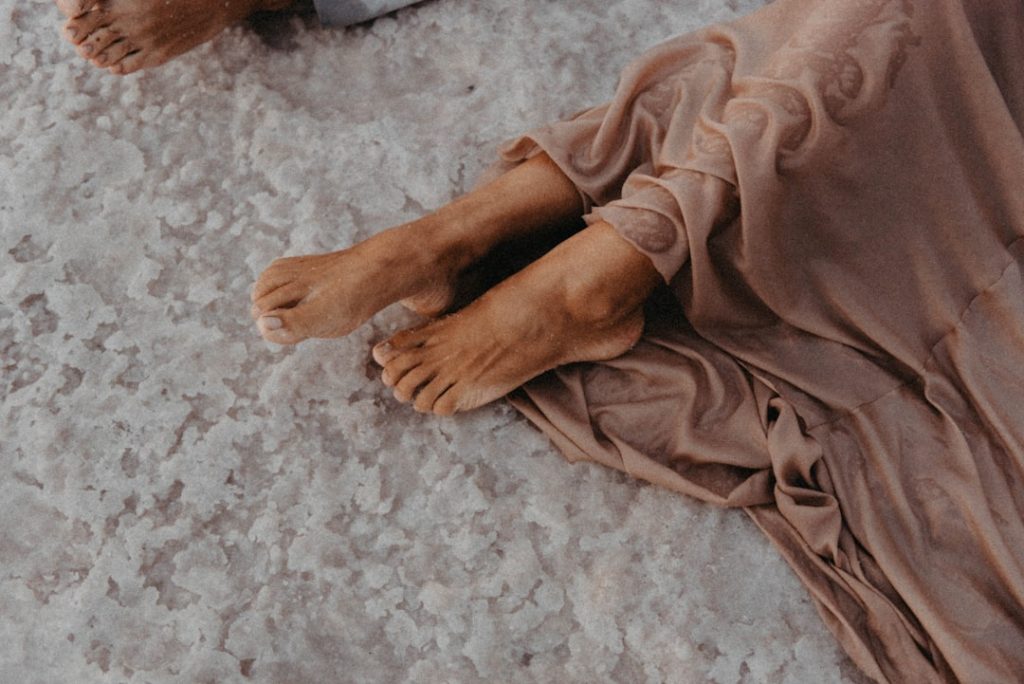
Image: Photo by Olga Solo on Unsplash.